


Keyboard Escape: +1 Speed ASMR
3.427.00 Reviews
App Specs
- Version
- 0.1.1
- Updated On
- License
- Free
- Downloads
- 5,000,000+
- Developer
- Goldoint
- Categories
- Simulation
- Platform
- Android
Screenshots
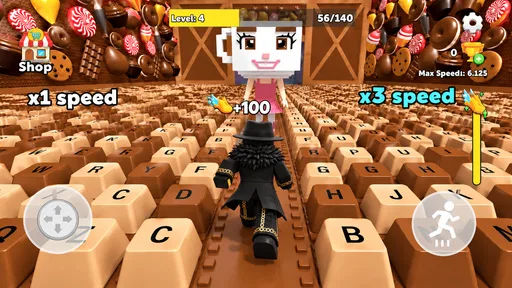
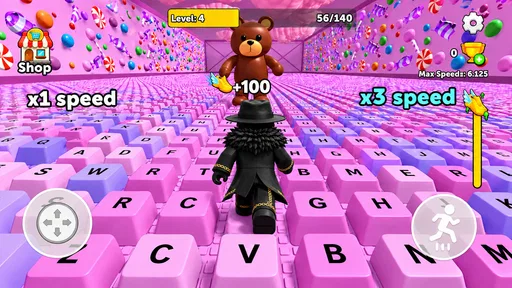
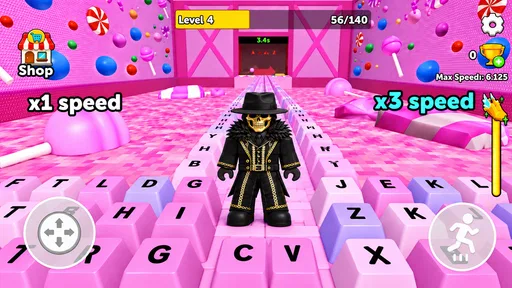
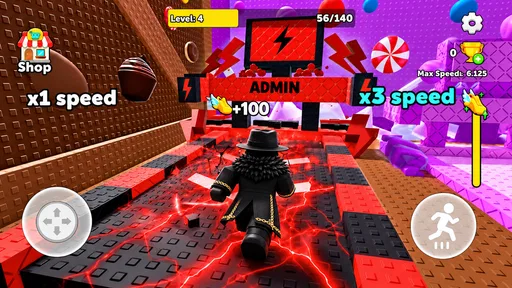
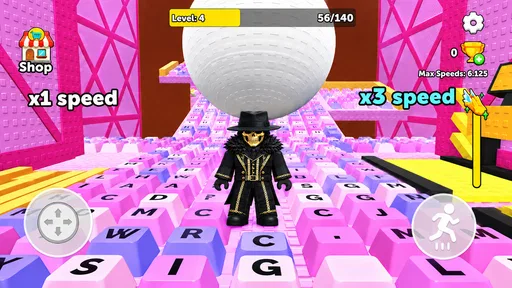
 Analysis by AppCompare
I tried Keyboard Escape: +1 Speed ASMR expecting a small game I could pick up between other things, and that is where its idea makes the most sense. It turns a familiar keyboard into the backdrop for a run-and-dodge challenge, with speed building as the action continues. I found the concept easy to understand and more about staying alert than following a story. It feels like a compact arcade diversion wearing a simulation label, so I’d recommend it to someone who wants a brief, tactile-feeling game—not to anyone looking for a deep management experience.
A keyboard-themed escape built for quick sessions
I find the keyboard setting gives this quick escape game a clear identity, but the appeal depends on how well its sounds and rising pace work for you. I’d use a first session to notice whether the theme feels inviting or repetitive, then pay attention to how the challenge changes as speed builds. That balance is what the next section explores.
First impressions: a simple idea with a distinct mood
The premise is easy to grasp without a tutorial-heavy setup: keep moving, avoid trouble, and try to get faster. That clarity is useful when I only have a few minutes free. The keyboard theme gives the action a recognizable visual hook, while the escape framing supplies a basic sense of urgency. It is less about a story unfolding than about staying alert and enjoying the repeated movement.
Goldoint lists the game as a simulation, though its moment-to-moment feel is closer to a lightweight reflex challenge than to a conventional simulator. That mismatch is worth knowing before downloading. If I’m expecting to operate a realistic keyboard, customize a desk, or manage a detailed virtual environment, this is not that kind of experience. The theme is the setting for a straightforward run-and-dodge loop.
The game is free, rated Everyone, and has reached over five million installs. Its average rating is 3.4 from around 2,400 ratings, which suggests a broad audience alongside room for improvement. I read those figures as a reason to keep expectations measured: the concept is accessible, but it is not necessarily a polished, endlessly compelling fit for every player.
A visual language that supports the premise
The keyboard setting does useful work even when the mechanics stay simple. Keys are familiar objects, so the theme can make a basic course feel more distinctive than a generic path. I like that the game’s identity is easy to explain: it turns a desktop object into the backdrop for an escape. That coherence matters in a compact game, where there may not be much room for a large cast, a complicated plot, or elaborate world-building.
At the same time, a strong theme can only carry so much. Players who want varied locations, character development, or a sense of discovery may find the premise too narrow. I would approach it as a focused visual mood rather than a simulation of a working keyboard. Its setting is best appreciated as a playful frame around movement, not as a promise of realism.
Worth Reading Before You Choose

Baby Panda World Brings Quick Play to Modern Phones, but Its Game Library Feels Busy

ESPN’s Live Game View Makes Following Close Games Easier

QuizzLand Review: A Good Fit for Short Trivia Breaks, Not Every Player

Basketball Stars: Multiplayer Is Fast, but Can It Recover When Matches Go Wrong?

WEBTOON Turns Phone Updates Into a Better Reading Routine

Link to Windows Runs on Shared Habits, Not Social Feeds
One practical way to decide whether the theme works for you is to ask what you want from a short mobile game. If a familiar object made strange and playful sounds appealing, the concept has a clear point of difference. If you mainly want rich scenery or a world that changes as you progress, a more expansive adventure or management game is likely a better use of your time.
Sound and rhythm: the part that gives movement its character
The ASMR emphasis points toward a game meant to feel satisfying as well as challenging. In a keyboard-themed setting, sound can help make movement feel tactile, turning taps and motion into part of the atmosphere instead of background decoration. That is a good match for a game built around repeated actions: a pleasing rhythm can make a short run feel more engaging even when the objective stays familiar.
I’d treat the audio mood as a reason to try it with sound on, especially during a quiet break, rather than assuming it will work equally well in every situation. A game whose appeal includes sound may lose some of its character in a noisy room or with the volume muted. Conversely, anyone who prefers silent play, or who finds repetitive effects tiring, may want to keep the sound low or take breaks rather than expecting the audio to remain pleasant indefinitely.
There is also a useful trade-off between rhythm and attention. Relaxing, crisp sound can make the activity feel calming, but dodging still asks me to stay alert. I wouldn’t describe it as a hands-off ASMR experience: the mood may be soothing, while the action calls for active reactions. That combination suits short sessions better than using it as background entertainment while concentrating on another task.
Where the mechanics fit—and where they may feel limited
The game’s central loop combines running, dodging, and gaining speed. That creates a natural tension: faster movement can feel rewarding, but it also makes careful reactions more important. My advice is to focus on learning the pace of a run rather than chasing speed immediately. When a game rewards momentum, it is tempting to treat every increase as automatically good; in a dodge-focused challenge, the more useful question is whether I can still read what’s ahead and respond comfortably.
This is one of the more interesting trade-offs in the concept. Speed is both a reward and a source of pressure, so the same mechanic can make a successful run feel exciting and a mistake feel abrupt. Players who enjoy improving through repeated attempts may appreciate that push and pull. If you dislike restarting or prefer gradual, low-stakes progress, the same loop might feel more demanding than relaxing.
For an everyday use case, I can see it fitting into a short wait between errands or a quick break after finishing a task. It gives me a clear activity to focus on without asking me to remember a long quest or manage a complicated setup. I would avoid starting a run when I need to keep my attention on a conversation or a work task, though: the dodging and increasing pace are exactly what make it interactive, and they are not ideal for distracted play.
Compared with other simulation games, this is a very different proposition. A typical management sim gives me systems to plan around and decisions that accumulate over time; this game leans on immediate movement and moment-to-moment reactions. Compared with a conventional endless runner, the keyboard framing and ASMR mood are the distinguishing angle, while the basic appeal remains the familiar challenge of staying in motion and avoiding obstacles. If your priority is deep strategy, a fuller simulator is the better choice. If you want an uncomplicated reflex game with a specific theme, this is more suitable.
Another practical tip is to judge the game by the feel of a complete short session, not only by the novelty of the opening. A strong first impression can come from the unusual setting, but the longer-term question is whether the movement and sound remain enjoyable after the idea is familiar. If I find myself wanting more variety, that is a reasonable signal to move on rather than forcing the game into a role it was not built to fill.
Who should try it, and what to expect on a phone
I’d point casual players toward it if they like simple objectives, quick attempts, and a light sensory theme. It may also suit someone who enjoys testing their reactions without committing to a long campaign. The Everyone age rating makes its intended audience broad, though the right fit still depends on whether the player enjoys a fastening pace and repeated dodging more than story, exploration, or detailed customization.
It is less likely to satisfy players who want a substantial simulation, a narrative with clear chapters, or a wide range of activities. It may also be a poor match for someone who is sensitive to repeated sound or who finds speed-based challenges stressful. Those aren’t faults that every player will experience, but they are real reasons to choose a quieter puzzle game or a slower simulator instead.
The current version is 0.0.9, and the minimum operating system requirement is 8.1. Those details are useful to check against an older device before installing. Goldoint is the developer, and the free-to-play entry point makes it easy to sample the central idea without treating it as a major purchase. I’d still decide based on whether the specific run-and-dodge rhythm sounds appealing, not simply because it costs nothing.
A reasonable way to try it is to begin with a short session and pay attention to three things: whether the keyboard setting feels charming rather than repetitive, whether the sound adds to the mood, and whether gaining speed makes the challenge fun or frustrating. That quick check tells you more about personal fit than the category label alone. If all three parts work for you, it can be a handy small game to return to when you want an immediate distraction.
For a practical routine, I’d save it for a deliberate pause rather than opening it while waiting for a message or listening to someone speak. A brief, uninterrupted attempt lets me notice whether I’m reacting comfortably as the pace changes, and whether the sound is helping me settle into the play or becoming distracting. That simple distinction is useful: the game can be a good reset when I have a spare moment, but it is a poor companion for multitasking because its central appeal depends on my attention staying with the course.
It is also worth thinking about what kind of replay loop you personally enjoy. If you like trying again to improve your timing, a repeated run can feel purposeful even without a larger campaign. If you need new objectives or environments to keep a game fresh, the keyboard premise may stop surprising you before long. I would treat that as a question of fit rather than a reason to expect the game to transform into something broader.
The atmosphere is the main reason to stay
What holds the experience together is the link between its keyboard setting, tactile sound emphasis, and increasingly brisk movement. The mechanics are easy to understand, and their speed-versus-control tension gives each attempt a modest challenge. The result is a focused little game rather than a broad simulation, and I think it is strongest when approached with that distinction in mind.
My verdict is cautiously positive for the right player. I’d try it if a keyboard-inspired escape and sound-led presentation sound more appealing than a story or a management system. I’d skip it if I need deep progression, major variety, or a relaxed game that asks almost nothing of my attention. With its 3.4 average and substantial install count, Keyboard Escape has clearly found an audience, but its appeal depends on whether its compact loop stays satisfying for you. Treat it as a brief, mood-driven reflex game, and its simple premise makes sense.
Goldoint’s game is easiest to recommend when you want a compact change of pace: it has a recognizable visual idea, an audio-led mood, and an objective that asks for quick reactions rather than long-term planning. I’d choose it over a conventional management sim when I want immediate play, but choose a slower puzzle or a more varied runner if I’m after low-pressure thinking or a wider stream of changing content. The key decision is whether the keyboard atmosphere and speed challenge feel enjoyable together. If they do, this is a convenient little diversion; if not, the premise alone probably will not keep me playing.
Pros
- Simple controls make it easy to start playing right away.
- Short rounds are well suited to quick breaks.
- Speed upgrades provide a clear sense of progression.
- The escape-focused gameplay offers a distinct twist on keyboard games.
- ASMR-style sounds can make the action feel more satisfying.
Cons
- Gameplay may feel repetitive after extended sessions.
- Progress can become slower as upgrade costs increase.
- The ASMR sounds may not appeal to every player.
- Some levels may feel too easy for experienced players.
- Frequent ads may interrupt the flow of play.
FAQs for Keyboard Escape: +1 Speed ASMR
What is Keyboard Escape: +1 Speed ASMR?
Keyboard Escape: +1 Speed ASMR is presented as a casual mobile game built around keyboard-themed interactions and satisfying ASMR-style sounds. The “+1 Speed” wording suggests a progression mechanic in which actions can increase speed, but exact objectives and features may vary by version. Check the store listing and screenshots for the current description before downloading, since they provide the most reliable details about the game’s content.
How do you play Keyboard Escape: +1 Speed ASMR?
The title points to simple, touch-based gameplay involving keyboard-like controls and speed-focused progression. As with many casual games, you may be able to start quickly without learning complicated rules, but the precise controls, goals, and level structure should be confirmed in the current app listing or during the tutorial. If you prefer games with detailed strategy or a substantial story, review the screenshots and description first.
Is Keyboard Escape: +1 Speed ASMR free to download and play?
Whether the game is free, includes advertisements, or offers optional in-app purchases can depend on the platform, region, and current release. Before installing, check the Google Play or App Store page for its price, purchase information, and any advertising disclosures. A free download does not necessarily mean every feature is free, so review purchase prompts carefully, especially if children may use the device.
Does Keyboard Escape: +1 Speed ASMR work offline?
Offline availability is not guaranteed by the game’s title, and some mobile games require an internet connection for advertising, updates, account features, or other online services. Check the store description or test the game without a connection after installation if offline play matters to you. Keep in mind that features supported offline may differ from those available when connected, and an update may change those requirements.
Is Keyboard Escape: +1 Speed ASMR safe for children, and what should I check before downloading?
Suitability for children depends on the game’s content, age rating, advertising, data practices, and purchase options, which can differ between store versions and regions. Read the age rating and privacy information on the official listing, and check whether the app contains ads or in-app purchases. Parents may also want to use device-level purchase restrictions and review the permissions requested during installation.


